Works with Google Calendar, Apple Calendar, Outlook and most other calendar apps.
Who is this for?
Made for practitioners who want practical change
This course is for anyone working in the development or humanitarian sector who is involved in monitoring, evaluation, learning or research and who wants to come away with practical strategies to decolonise their work. If you want to go beyond just the idea of "we need to decolonise" and start doing things differently, this course is for you.
What you will learn
To identify how colonial ways of thinking continue to influence M&E and research practices in the Development and Humanitarian sectors.
To explore how feminist principles offer helpful ways of thinking about how to identify and reduce the impact of intersecting power hierarchies.
To critically reflect on power and identify practical strategies that can help to unravel colonial ways of thinking and behaving across the project/research cycle: from the scoping/design stage, to data collection, analysis and dissemination.
What all participants receive
✦12 hours of live facilitation with an experienced trainer and practitioner, across four days on Zoom.
✦Peer learning — an opportunity to learn with and from fellow practitioners and researchers from around the world.
✦A detailed course manual with key concepts and a detailed resource list to use during and after the course.
✦A 1:1 conversation with the facilitator to get advice and support on your specific research or evaluation projects.
✦An invitation to join a peer support group of current and previous course participants.
Price
Standard course fee
£499 per participant
Pay in full when booking, or hold your place with a £50 deposit and settle the remainder within 7 days. The deposit is refundable (minus the transaction fee).
Subsidised places available. Some places are reserved for people who might need more financial support. The standard course fees fund subsidised places for participants with fewer resources. If you would like to apply for a subsidised place, please complete the Expression of Interest form below rather than booking directly.
Reserve your place
Places are limited to 15 participants. Once the course is full, bookings will close.
Prefer to pay by bank transfer in GBP, USD or EUR, or need an invoice for your organisation? See bank transfer details.
What people say
"I'm not going to be able to look at anything the same again."
"It was exceptionally delivered and prepared."
"What I liked most about the course was how it combined strong conceptual discussions with honest reflection on real-world practice. It didn't just introduce the idea of decolonising research — it created space to question everyday practices we often take for granted, like tight timelines, donor-driven agendas, or extractive data collection."
"The group processing was wonderful. It was great to work with colleagues across sectors."
"I would highly recommend it for anyone in the development/humanitarian space, especially for people in the global south. We need to speak up and break the colonial mindsets that we have been preconditioned to accept for so long."
"If you feel lost in trying to resist the colonial practices of the development field, this is a practical and valuable course to equip yourself with tools and perspectives to keep going forward."
"For someone interested in really pushing thinking about decolonizing in our work spaces of research and development work, this is a great learning opportunity. I appreciate Michelle sharing examples and practical resources to prompt reflections about positionality and various steps of the research process. The opportunity to be connected with other like-minded individuals beyond the course is a huge bonus!"
Also coming soon
Demystifying Qualitative Research
Online · 4 hours · £50 per participant · Dates to be announced
Feeling lost when it comes to qualitative research? Demystifying Qualitative Research is a four-hour training delivered online, designed for anyone curious about qualitative research but unsure where to begin. We'll tackle key questions like what makes qualitative research robust and how to know if it's right for your work, all in a practical and supportive setting.
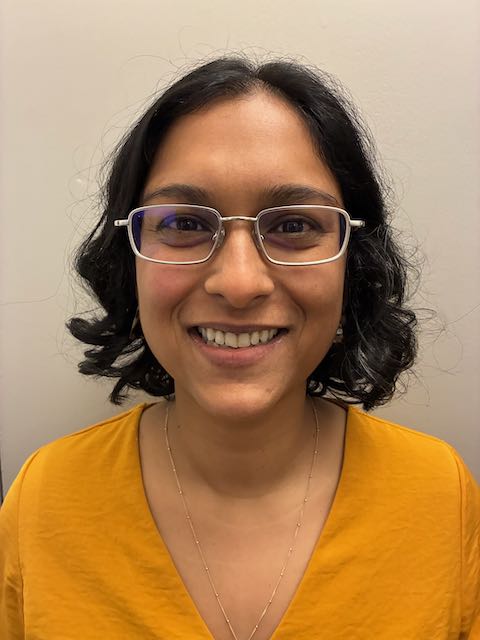
Michelle Lokot is an independent consultant, humanitarian practitioner and researcher, specialising in monitoring and evaluation, qualitative research and gender-based violence (GBV).
She was Assistant Professor at the London School of Hygiene and Tropical Medicine (2019–2026), where she led studies on decolonising the field of Violence Against Women and Girls, power hierarchies within field research, sexual and reproductive health in Somalia and South Sudan, GBV localisation among community-based actors in Kenya, and the unintended consequences of GBV programmes in Jordan and Kenya. She was Co-Director of the Health in Humanitarian Crises Centre (2022–2025).
Michelle's prior work as a humanitarian practitioner included longer-term work in Jordan, Nigeria and Burundi, focused on programme management, technical advice and monitoring and evaluation. She has consulting experience with organisations such as Plan International, the International Rescue Committee and SIHA Network.
Michelle supports NGOs and UN agencies in using feminist decolonial approaches in their work.
We have policies in place to ensure a high-quality, safe and fair experience for all participants.
Cancellations & refunds
A full refund will be issued for cancellations made in writing (by email) at least 7 full days before the course start date.
Cancellations made less than 7 days before the start date are not eligible for a refund.
If you are unable to attend, you are welcome to transfer your place to a colleague or friend at no extra cost. Please let us know their name and email address in advance.
In the unlikely event that we cancel the course, you will receive a full refund.
No recording or AI assistants
Sessions will not be recorded, to ensure all participants feel comfortable sharing their experiences and questions freely. To protect participant privacy and encourage genuine interaction, AI meeting assistants and transcription bots are not permitted to join the sessions.
Expression of interest and subsidised places
Not ready to book yet?
Complete the form below to register your interest in a course, apply for a subsidised place on the Decolonising M&E and Research course, or sign up for updates on future cohorts.
Expression of interest received
Thank you! We'll be in touch soon with more information.